
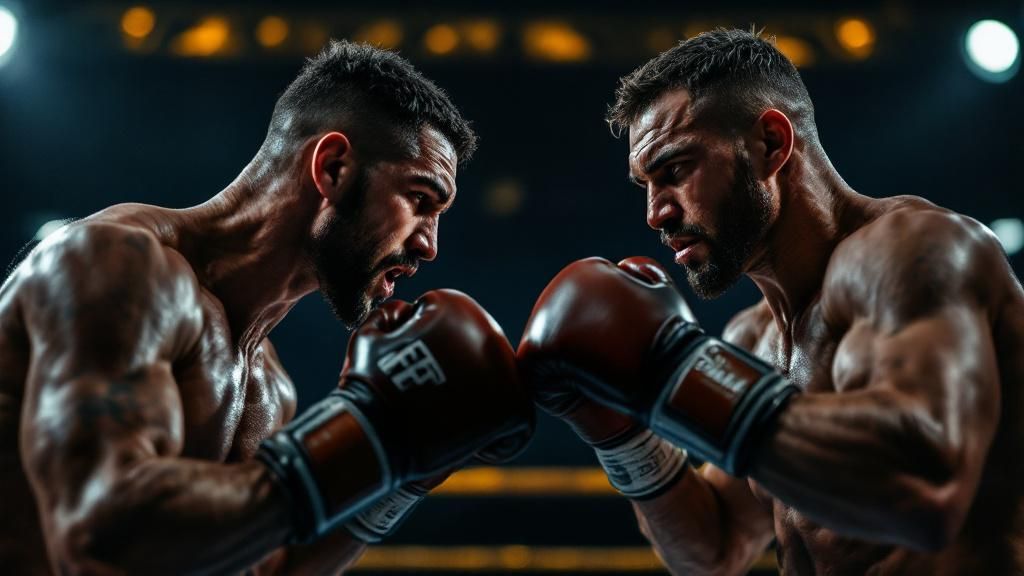
WBO heavyweight world champion Fabio Wardley has urged experienced Derek Chisora to retire after his much-awaited fight against fellow boxing legend Deontay Wilder on Saturday evening. The two veteran heavyweight fighters, aged 42 and 40 in that order, will both be fighting their 50th professional fight when they meet at London’s O2 Arena. Wardley, who has sparred extensively with Chisora and counts him amongst his most loyal backers in the sport, believes the time has come for the British heavyweight to retire from the ring. “Derek Chisora has dedicated himself completely to the sport,” Wardley said. “Whether he beats Deontay Wilder or not on Saturday, I’d like to see him call it a day.”
A Vocation That Merits Respect
Wardley’s sentiments showcase the genuine respect he has for Chisora’s impact on professional boxing. Having spent considerable time the veteran fighter across his professional journey, Wardley witnessed firsthand the commitment and drive that has characterised Chisora’s twenty-year career in the sport. “After all the entertainment he has given us, he merits the opportunity to enjoy some time to himself,” Wardley stated, acknowledging the toll that such a lengthy career has on on a boxer’s physical and mental health. The title-holder understands that Chisora has merited the opportunity to walk away on his own terms, having proven himself repeatedly against quality opposition across his career.
However, Wardley stays realistic about the prospect of Chisora taking such counsel. The psychological pull of professional boxing, combined with the struggle of retiring at precisely the right moment, creates what Wardley describes as “a never-ending cycle of ‘maybe one more’.” The champion understands that fighters seldom accept guidance about when they should stop, most notably someone of Chisora’s independent streak and competitive drive. “Not many people are going to be in a position to telling him when he should stop,” Wardley stated. “He’s going to set his own timeline and conditions. So we can voice all the concerns we want about his welfare, but Derek will be Derek and do what he wants.”
- Chisora praised Wardley upon securing his British championship
- Backed Wardley in his matches against Parker and Dubois
- Reliably supportive of fellow fighters throughout his career
- Remains visible and respected throughout the boxing world
The Variable Nature of Pension Years
Wardley recognises the significant challenge that presents itself to any athlete contemplating the conclusion of their career. The decision to retire amounts to far more than a straightforward career decision; it covers emotional, financial, and psychological dimensions that make stepping away from competition extraordinarily challenging. The wish to end on a high note creates a paradox that has trapped countless fighters throughout boxing history. Once a fighter achieves that hard-won final win, the desire to take just one more bout becomes nearly impossible to resist. “It’s tough to exit on a loss because you want to end your career on a high,” Wardley explained, “but then once you do end on a high, you think, ‘well, if I did that, maybe I can do one more’.”
This psychological pitfall has caught Chisora for years, maintaining his presence at the elite level well into his forties. The ambiguity around retirement choices affects not only the fighters but also those who worry about their welfare. Wardley expressed genuine concern for boxers throughout their careers, noting that significant events can occur at any point. “It’s a risk no matter what stage you’re at with your career,” he noted, highlighting that fighters at all career stages face substantial hazards. Yet despite these genuine safety concerns, Wardley understands that advice from others rarely influences a fighter’s eventual choice, particularly one as resolute and self-directed as Chisora.
The Never-ending Cycle
The phenomenon of fighters returning for “one more” bout illustrates a extensively recorded trend in the professional boxing world. Each win seemingly justifies the decision to continue, whilst each loss creates reason to pursue attempting another fight to restore damaged reputation. This recurring cycle has maintained many seasoned competitors boxing longer than medically recommended or in their personal interest. Wardley identified this pattern as particularly entrenched in Chisora’s professional record, describing it as a endless cycle that has continued across many years. The mental commitment in professional boxing, combined with the economic benefits and the personal identity fighters cultivate around their career, makes escaping this pattern extraordinarily hard.
Understanding the mechanics of this process reveals why public calls for stepping away often receive little attention. Fighters tell themselves that one extra bout might open the door to a championship opportunity, a lucrative opportunity, or a chance to establish their reputation conclusively. However, that prospect invariably results in another possibility, then another, creating an infinite regression of “maybe one more” choices. Wardley’s analysis suggests that Chisora, like many veteran fighters, will probably establish his own when to retire independent of counsel from fellow colleagues. The sport’s culture, paired with personal psychological factors, ensures that the determination ultimately rests entirely with the competitor themselves.
A Surprising Yet Logical Partnership
When reports about the Chisora versus Wilder fight initially surfaced, Wardley admitted to real astonishment at the pairing. Both fighters seemed headed for greater opportunities elsewhere—Chisora had been discussed as a potential world-title challenger against Wardley himself, whilst Wilder was being positioned for a showdown with heavyweight kingpin Oleksandr Usyk. The choice to reject these apparently higher-profile possibilities in preference for facing each other initially struck Wardley as peculiar. Yet upon reflection, the logic underlying the matchup became increasingly apparent, converting what first appeared an odd coupling into a truly captivating contest.
The intrigue fundamentally centres on two seasoned competitors, each approaching their fiftieth bout at the professional level, examining if either retains the mental and physical stamina needed at elite level. This situation presents an intriguing question: who can still deliver when the stakes are highest? Wardley acknowledged the attraction of witnessing two veterans with decorated records face off, each possessing years of expertise and countless battles. The inquiry transcends simple victory prediction; it constitutes a real question into which fighter has aged more gracefully and retained sufficient quality to prevail over top-tier competition.
Chisora’s Momentum Versus Wilder’s Questions
Recent form provides Chisora with a substantial advantage heading into Saturday’s bout. Wardley observed that the heavyweight from Britain has fought against demonstrably higher-calibre opposition in recent bouts, proving himself against more dynamic and formidable competitors. This experience facing quality opponents has allowed Chisora to maintain his competitive sharpness and demonstrate sustained capability at the highest level. Conversely, Wilder’s recent record and quality of opposition remain less impressive, creating a tactical advantage for the London fighter. Chisora’s momentum, built through steady performances against respectable foes, positions him favourably entering the O2 Arena clash.
Beyond straightforward statistical comparison, Wardley highlighted that Chisora has retained the energy and vitality necessary for heavyweight boxing at the top tier. This physical freshness, combined with established recent showings, suggests the British heavyweight possesses genuine pathways to victory. Wilder, by comparison, faces doubts regarding whether extended time away from competition and previous losses have weakened his formerly dominant skills. The contrasting trajectories of both fighters form an engaging narrative where experience, current condition, and available physical resources all support Chisora’s chances on Saturday night.
Anticipating Saturday’s Result
Assessing the probable outcome of Saturday’s heavyweight fight requires close analysis of the evidence Wardley has laid out. Chisora enters as the slight favourite, supported by stronger recent showings and established record against quality opposition. His work rate and steady showings suggest he possesses the necessary tools to outbox or outlast Wilder across twelve rounds. However, heavyweight competition remains essentially volatile, particularly when two fighters with 100 combined professional contests step through the ropes. One well-timed shot, one moment of fortune, could change the outcome entirely. Wardley’s conclusion ultimately leans towards Chisora, yet recognises the underlying doubt that makes this fight genuinely compelling.
The appeal of this contest lies precisely in its unpredictability. Both fighters have demonstrated resilience throughout lengthy careers, surviving fights with world-class opposition and bouncing back from earlier defeats. Wilder, despite recent struggles, retains the explosive power that characterised his prime years—a element that cannot be completely discounted. Chisora’s experience handling difficult situations throughout his career suggests tactical maturity and fighting awareness that might turn out to be decisive. Ultimately, Saturday will reveal whether Chisora’s superior recent momentum proves adequate to overcome Wilder’s dangerous potential, or whether the American’s veteran status and knockout ability deliver an surprising outcome.
- Chisora’s recent form offers a real edge against Wilder’s uncertain condition
- Both fighters maintain devastating power despite their advanced ages and fight records
- Fight intelligence and tactical execution could be increasingly important than pure physical ability
What Winning Means for Each Fighter
For Chisora, a win signals confirmation of his continued relevance at heavyweight’s highest level and delivers strong rationale for continuing his career. A win over Wilder would reinforce his position significantly, possibly creating major opportunities—perhaps a world championship bout against Wardley himself could be realistic. More importantly, triumph would allow Chisora to depart on a high, defying Wardley’s retirement plea but providing the fighter with the high note he merits. Such a win would solidify his legacy as a genuine heavyweight contender who stayed competitive into his 40s.
Defeat for Wilder would likely signal the conclusive termination of his championship aspirations and potentially his boxing career completely. The American’s opportunity to regain relevance has tightened substantially; another setback would render subsequent return efforts progressively harder to defend. Conversely, a Wilder win would revive his status substantially, suggesting his peak years are still within reach and unlocking unexpected pathways toward major rematches or title shots. Either outcome bears profound implications for both fighters’ legacies and near futures.
